St Mary's Primary School A Catholic Voluntary Academy
Catholic Social Teaching
Catholic Social Teaching is rooted in Scripture, formed by the wisdom of Church leaders, and influenced by grassroots movements. It is our moral compass, guiding us on how to live out our faith in the world.
At St Mary's, Catholic Social Teaching is incorporated into our curriculum. Children are asked to put their faith into action and reflect on how their learning enables them to do so.
A weekly assembly focusses on supporting pupils’ personal development with a direct link to a Catholic Social Teaching principle. To enable pupils to live out Catholic Social Teaching principles in their everyday life, a going forth mission is shared with the children and parents via the newsletter.
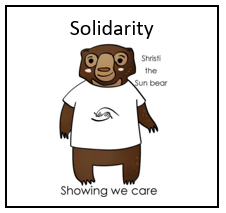
We show solidarity by:
- raising awareness of social justice
- writing to our local leaders
- praying for others
- making connections
- making socially responsible choices
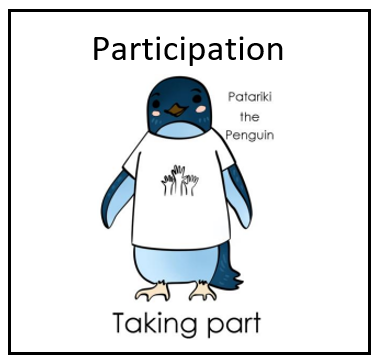
We show participation by:
- working together
- working for the common good
- participating and engaging
- being active members of our community
We show distributive justice by:
- Sharing fairly, not just equally
- Helping people who have less
- Using what we have responsibly
- Treating everyone deserves dignity and respect
- Working together to make things fair
We show the promotion of peace by:
- treating each other kindly
- turning away from conflict
- creating bonds between people
We recognise the common good by:
- caring about everyone
- showing everyone matters
- sharing and helping others
- thinking about others when making choices
- working together
- looking after people who need help
- caring for our community and the world
We recognise the human dignity of others by:
- being respectful
- treating people equally
- raising awareness of civil rights
- preferential option for the vulnerable
We show stewardship by:
- taking responsibility for our environment
- making environmentally responsible choices
- having awe and wonder for the natural world
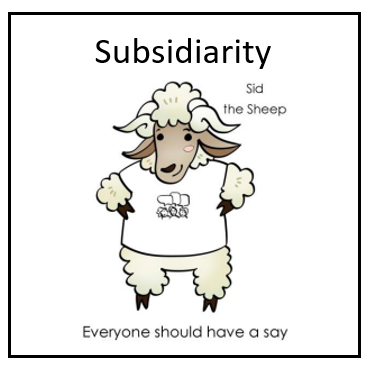
We acknowledge subsidiarity by:
- trying to solve problems ourselves first
- When part of a bigger group, try to help but not take over
- recognising everyone has an important role
- working together
- taking responsibility
- helping everyone to do their best
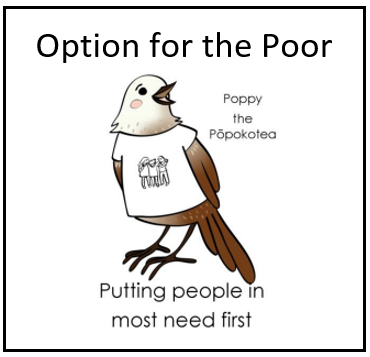
We show a preferential option for the poor and vulnerable by:
- fundraising for charitable causes
- raising awareness
- treating others with dignity and respect
- thinking of the needs of others